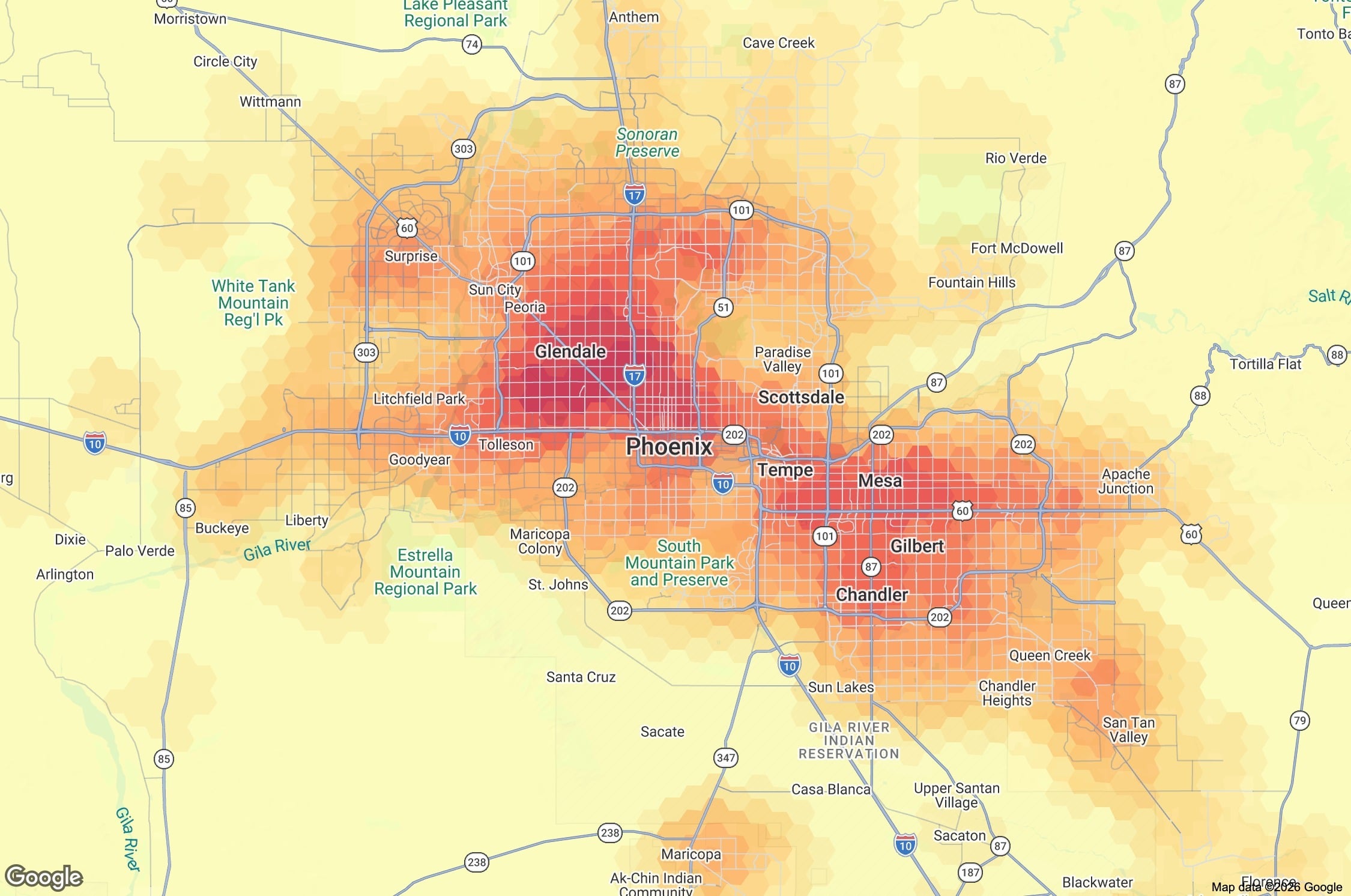
For years, executives making real estate decisions in Metro Phoenix could reasonably treat the Valley as one large labor market.
That assumption is becoming increasingly outdated.
The Phoenix metropolitan area is maturing into a collection of distinct employment corridors, each developing its own concentration of industries, talent, infrastructure and job growth.
For executives evaluating a headquarters, manufacturing facility, R&D operation or major lease renewal, that matters.
Because a real estate decision isn't simply a decision about a building. It's a decision about where your company will compete for talent for the next five, seven or ten years.
And increasingly, different parts of the Valley offer very different answers.
The Valley Is Specializing
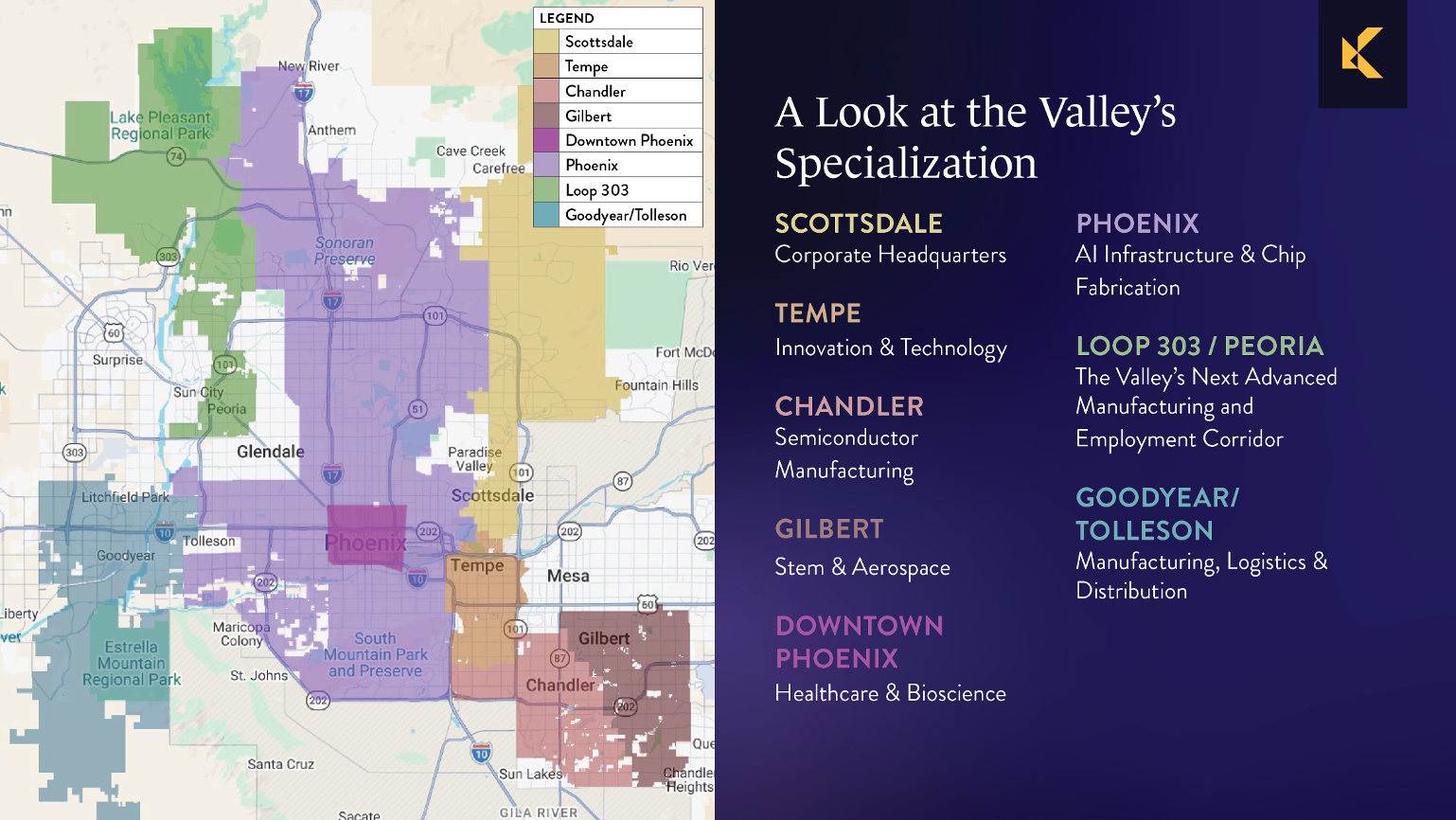
Look at where economic activity is concentrating across Greater Phoenix and a pattern begins to emerge.
Scottsdale continues to be a major corporate headquarters market. Tempe has established itself as an innovation and technology hub. Chandler has become internationally significant for semiconductor and advanced manufacturing. Gilbert has developed a growing concentration of STEM and aerospace activity.
Downtown Phoenix has built substantial momentum around healthcare and bioscience, while the broader Phoenix market is benefiting from enormous investments in semiconductor fabrication, AI infrastructure and the industries supporting them.
West of the traditional employment centers, Goodyear and Tolleson continue to attract manufacturing, logistics and distribution operations.
Then there is the Loop 303 and Peoria corridor. That area is particularly interesting because we're watching an employment center develop in real time. Major semiconductor and advanced manufacturing investments are helping establish the northwest Valley as another significant employment corridor. That creates an ecosystem around those investments: suppliers, engineering firms, service providers and ultimately additional employers following the infrastructure and workforce already being established there.
The result is not simply more jobs. It is greater specialization of jobs by geography.
Build for Talent Optionality
Strong companies will always have advantages in attracting talent. Culture, leadership, compensation, opportunity and reputation matter enormously - and in today's employer-favorable market, quality opportunities are drawing candidates from a much broader geographic radius.
Employees are currently demonstrating a willingness to commute approaching an hour for the right opportunity.
For executives making long-term real estate decisions, that's useful flexibility. It's also an opportunity to think ahead.
Real estate commitments often extend five, seven or ten years, while employment markets can shift considerably within that same period. As high-value employees gain more career options, proximity becomes another factor they can use to differentiate between otherwise attractive opportunities. Around a 30-minute commute is generally an important threshold in how employees evaluate the practicality of getting to work.
That doesn't mean a company with a great culture or compelling career opportunities suddenly can't recruit outside that radius. It means location can either reinforce the advantages you've already built as an employer or require you to compensate for geography elsewhere.
If you're attracting the caliber of talent you want, filling positions efficiently and paying market compensation, your location is likely doing its job.
But if the available talent pool begins to narrow, positions become consistently harder to fill, or you're finding that quality candidates require above-market compensation to make the opportunity worthwhile, geography should be one of the variables you examine.
Not necessarily the problem. Not necessarily the solution. But absolutely part of the equation.
That's why I believe the best time to think about workforce geography isn't when you have a recruiting problem. It's when you don't.
A favorable employment market gives executives the opportunity to build safeguards into long-term location strategy from a position of strength.
Follow the Workforce You Are Going to Need
This is where I believe executives need to think beyond today's labor conditions.
The question isn't simply, Where are our employees today? It is: Where will the employees we need five years from now be?
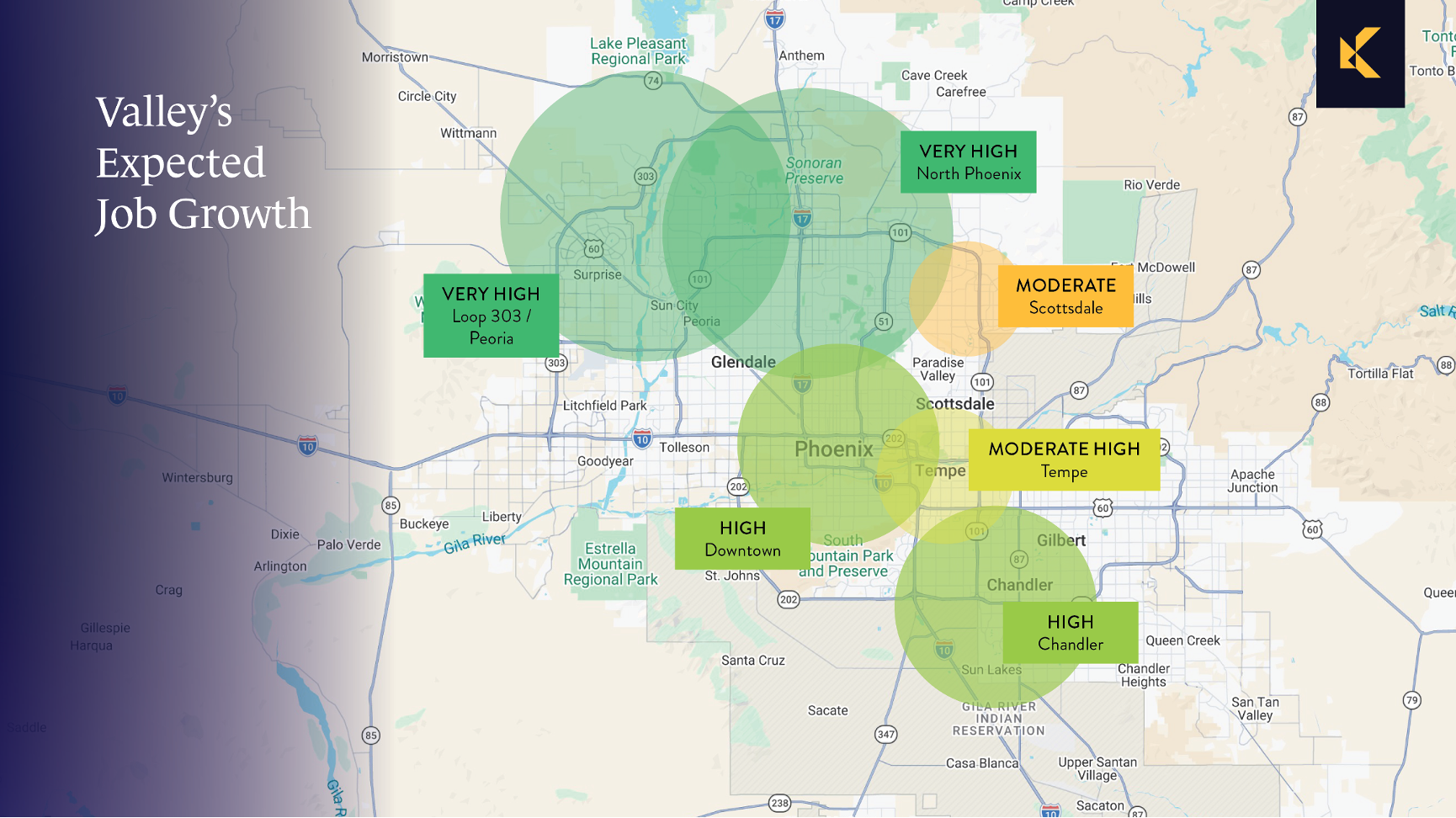
Expected job growth across the Valley isn't uniform. North Phoenix and the Loop 303/Peoria corridor are positioned for particularly strong growth. Downtown Phoenix and Chandler remain important employment centers, while Scottsdale and Tempe continue to play distinct roles within the broader market.
None of that automatically makes one location better than another. It means executives should understand what each location is optimized to do.
A corporate headquarters has different labor, accessibility and amenity requirements than a semiconductor operation. An aerospace company needs something different from a healthcare organization. A logistics operation has an entirely different relationship with transportation infrastructure, land availability and workforce geography.
Real estate strategy should reflect those differences.
Real Estate and Talent Strategy Are Converging
One of the biggest changes I've watched in corporate real estate is how closely the real estate conversation has become intertwined with the talent conversation.
Historically, companies might identify a desirable submarket, evaluate available buildings and negotiate the economics. Today, sophisticated location strategy should start earlier.
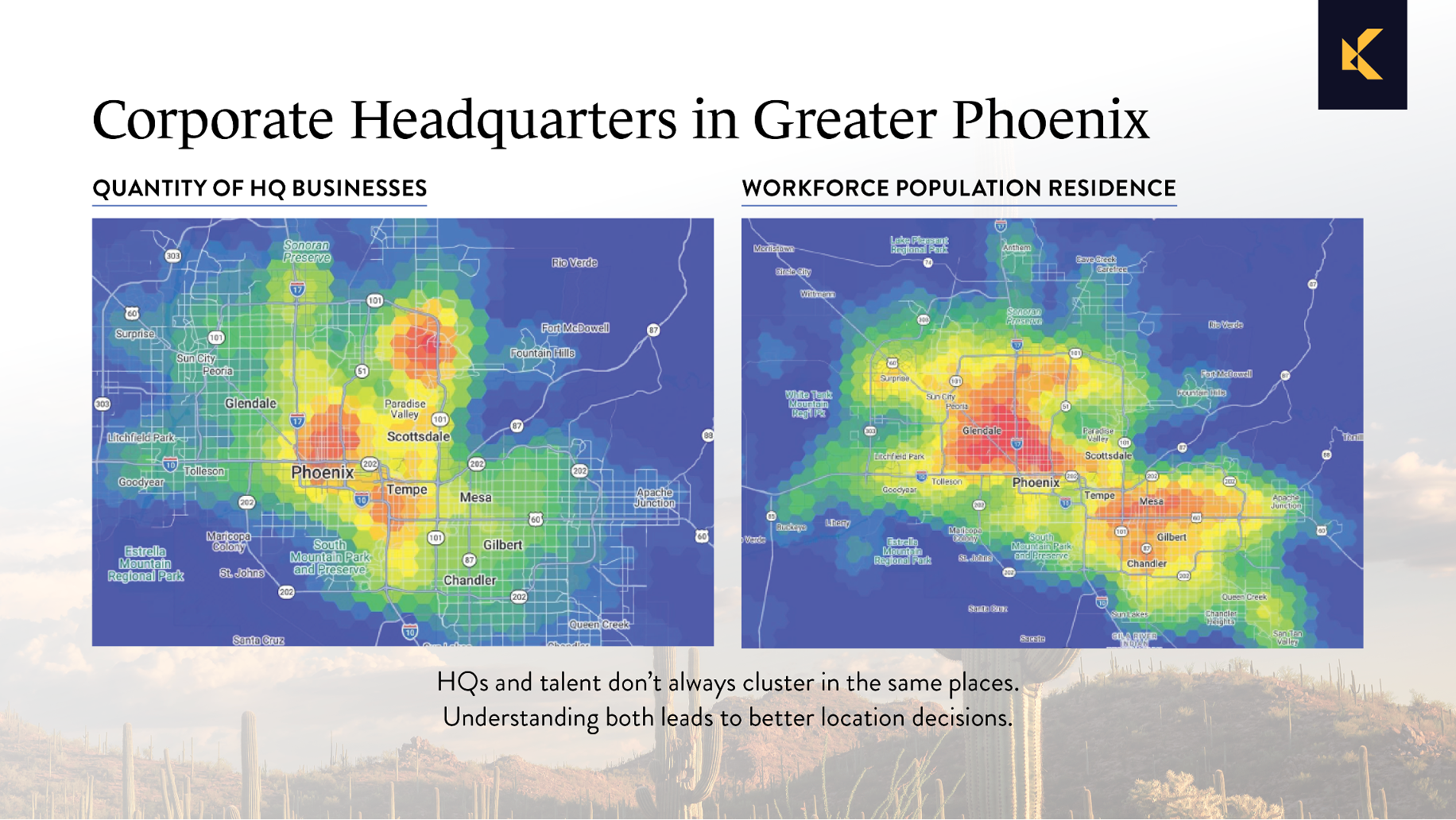
Where does your workforce live? Where is your industry concentrating? Where are competing employers investing? Where is infrastructure being built? Where is housing expanding? And where is the next generation of your workforce likely to come from?
Only then should you start asking which buildings are available.
Because occupancy cost is only one part of the financial equation. A company can negotiate an exceptional real estate deal and still give those savings back through higher recruiting costs, compensation premiums, turnover or positions that take longer to fill.
Conversely, the most expensive submarket is not necessarily the best location for talent either.
The objective is alignment: the right real estate, in the right labor market, for the workforce your business actually needs.
The Map Is Changing
Phoenix's growth story is well known. What's more interesting to me now is how that growth is reorganizing the Valley.
We're not simply adding people, buildings and jobs. We're developing increasingly sophisticated employment ecosystems across multiple parts of the metro.
For executives, that creates more options - and better opportunities to align real estate decisions with long-term business strategy.
The building you select today may be where your organization operates well into the 2030s. Today's employer-favorable hiring environment will change long before many of those leases expire.
You don't need to predict exactly when the labor market will shift. You simply need to make today's real estate decisions with enough foresight that they still make sense when it does.
What’s Next for Your Commercial Real Estate Strategy? Reach out to my team for a free visioning session where we help you align your operations with a clear roadmap for your commercial real estate strategy. Sign up here: Contact and Connect with Keyser