
Greater Phoenix is undergoing one of the most significant economic expansions in its modern history. Over the past decade, the region has emerged as one of the fastest-growing major metropolitan economies in the United States, attracting large-scale investment in semiconductors, advanced manufacturing, healthcare, technology, and higher education.
Since February 2020, the Phoenix labor force has grown by nearly 280,000 workers, an 11% increase—more than triple the national growth rate during the same period. Phoenix has one of the fastest labor force expansions among major U.S. metropolitan areas. Population migration, corporate expansions, and billions in capital investment continue to reshape the region’s workforce and economic landscape.
But this expansion is doing more than creating jobs—it is fundamentally reshaping commercial real estate demand across Greater Phoenix.
New industry clusters, university expansion, and corporate relocations are influencing where companies locate offices, build industrial facilities, and develop innovation districts. Employers are increasingly aligning their real estate decisions with workforce access, commute patterns, and talent pipelines.
This guide explores:
- Which industries are driving workforce growth in Greater Phoenix
- How corporate relocations and expansions are influencing office and industrial demand
- The role universities play in sustaining talent pipelines
- How university expansion is shaping innovation districts
- Why aligning workforce strategy with commercial real estate strategy creates long-term competitive advantage
Which Industries Are Driving Workforce Growth in Phoenix?
Phoenix’s labor market continues to expand across multiple industries, though healthcare, education, and advanced manufacturing remain the primary drivers.


Healthcare and education services alone accounted for roughly 28% of all jobs added in the region in 2023/2024. At the same time, investments in semiconductor manufacturing, logistics infrastructure, and professional services continue supporting long-term economic expansion. The region is being coined "The Silicon Desert" and now ranks 4th in U.S. semiconductor employment, with strong growth.
Looking ahead, Arizona labor market projections estimate more than 67,000 additional jobs will be added statewide between through 2026, reinforcing the region’s continued workforce momentum.
Job Growth Snapshot
(Recent Growth + 2026 Outlook)
|
Industry Sector |
Recent Growth & Outlook |
|
Healthcare & Education Services |
+17,500 jobs added ~28% of all new jobs |
|
Professional, Scientific & Technical Services |
+5,300 jobs added (3.7% growth) |
|
Government |
+8,100 jobs added (3.2% growth) |
|
Wholesale Trade |
+4,900 jobs added (4.9% growth) |
|
Construction |
+4,500 jobs added (2.7% growth) |
|
Transportation, Warehousing & Logistics |
+3,600 jobs added (3.0% growth) |
|
Manufacturing (including semiconductors) |
Continued expansion driven by advanced manufacturing investment |
|
Outdoor Recreation Economy |
~111,000 jobs generating ~$14B in economic output |
|
Semiconductors (TSMC) |
Workforce projected to grow from ~3,000 to ~6,000 employees by the end of the decade |
These industries are shaping demand for medical office buildings, research facilities, industrial campuses, logistics infrastructure, and professional office environments throughout Greater Phoenix.
How Are Corporate Relocations Influencing Phoenix Real Estate Demand?
Over the past decade, Greater Phoenix has attracted hundreds of corporate headquarters, relocations, and expansions, strengthening the region’s business ecosystem and accelerating job creation.
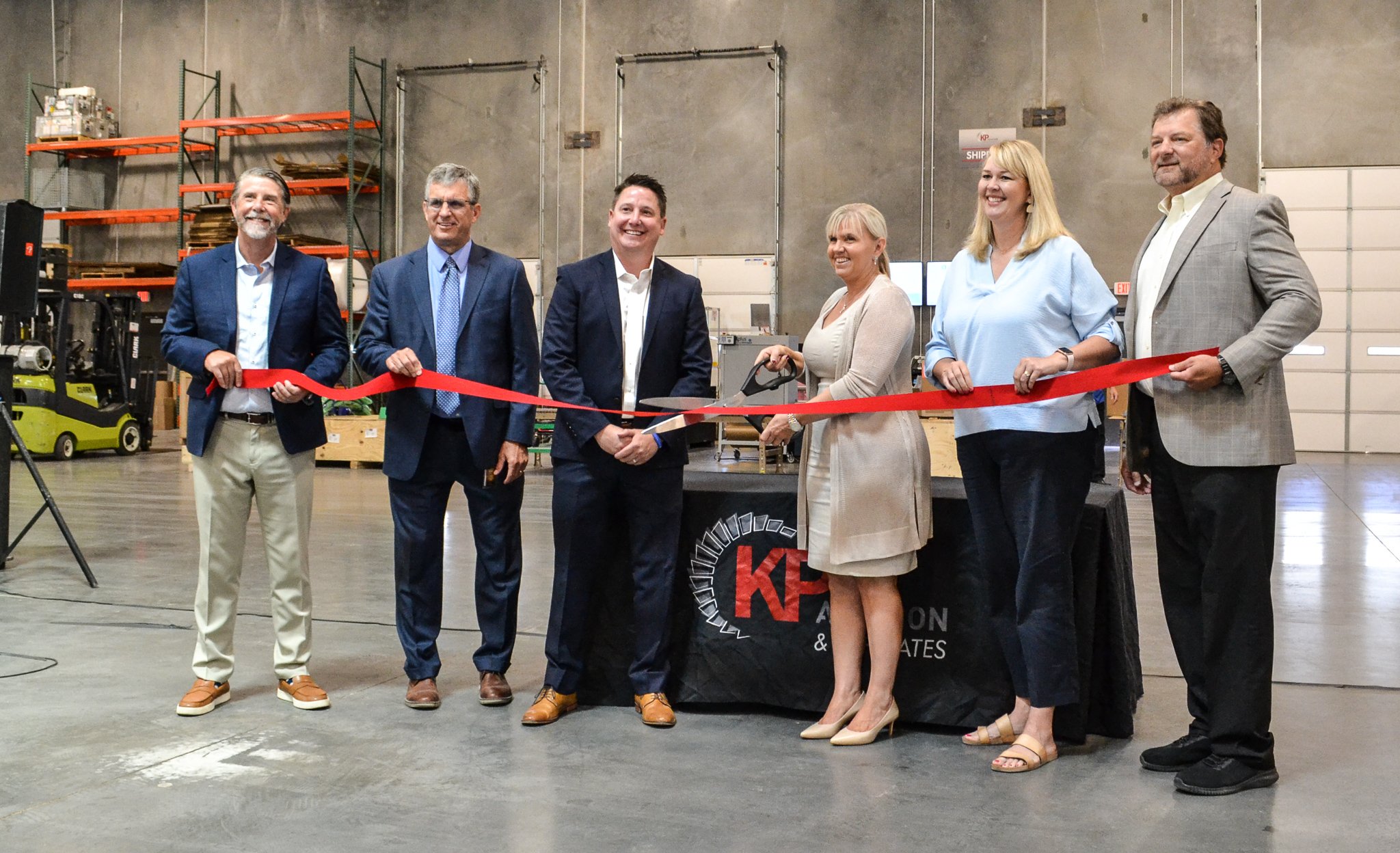
Keyser’s clients ASM International, KP Aviation, and Cognite have established headquarters or major corporate operations in the region.
Each corporate relocation generates ripple effects across the commercial real estate market, including:
- Increased demand for Class A office space
- Industrial facilities supporting supply chains
- Housing development for relocating employees
- Retail and lifestyle amenities supporting workforce growth
For companies evaluating Phoenix, workforce access has become a central factor in real estate decision-making.
How Are Universities Shaping Phoenix’s Talent Pipelines?
Universities play a central role in supporting Phoenix’s workforce expansion.
Arizona State University enrolls approximately 150,000 students, making it the largest public university in the United States. Meanwhile, the Maricopa Community Colleges serve roughly 200,000 students annually across 10 campuses.
Together with institutions such as Grand Canyon University, Midwestern University, and the University of Arizona College of Medicine – Phoenix, these schools supply a large pipeline of graduates in healthcare, engineering, technology, and business.
As these universities expand programs and research facilities, they also influence where companies choose to locate offices, labs, and research operations.
How Is University Expansion Driving Innovation Districts?
University growth is fueling the development of innovation districts where research, education, and private industry converge.
Examples include:
- Phoenix Bioscience Core – a rapidly expanding life sciences campus projected to support more than 20,000 jobs
- SkySong Innovation Center – a global innovation hub anchored by Arizona State University
- Tempe Research Park – home to technology companies and engineering firms
- Novus Innovation Corridor – A public–private development between ASU and Catellus, designed as a “city within a city” with offices, housing, and retail integrated around the university.
- Mayo Clinic / Discovery Oasis Biotech Corridor – Designed as a collaborative biotechnology campus integrating research facilities, corporate offices, and innovation labs.
These ecosystems create dense clusters of talent, research, and investment that attract companies seeking proximity to innovation and workforce pipelines.
How is Workforce Growth Transforming Phoenix Commercial Real Estate?
The expansion of advanced industries is driving a new wave of commercial real estate development throughout the region.
One of the largest catalysts is semiconductor manufacturing.

TSMC’s semiconductor campus in North Phoenix currently employs roughly 3,000 workers and is expected to grow to approximately 6,000 employees as additional fabrication plants come online later this decade.
This investment is also attracting suppliers, engineering firms, and advanced manufacturing partners that will further expand industrial development across the region.
Key real estate trends include:
- Industrial Expansion
Semiconductor investments are catalyzing billions of dollars in new industrial development and supplier facilities across North Phoenix and surrounding submarkets. - Innovation Campuses
Research districts linked to universities are expanding alongside bioscience and advanced technology industries. - Mixed-Use Employment Districts
Multifamily housing, retail, and amenity-rich developments are growing near employment centers to support workforce migration. - Infrastructure Investment
Municipalities across the Valley are accelerating investments in transportation, water systems, and utilities to support continued population and industrial growth.
Executive Insight: Workforce Access Is Shaping Location Strategy
For business leaders evaluating the Phoenix market, one insight is becoming increasingly clear:
-
Workforce access is now a primary driver of commercial real estate strategy.
-
Organizations that align real estate decisions with talent pipelines—universities, innovation districts, and workforce training centers—gain advantages in recruiting, retention, and long-term operational growth.
What is Keyser’s Role in Workforce-Driven Commercial Real Estate Strategy?
At Keyser, we believe commercial real estate decisions should begin with workforce analysis.
By combining demographic data, labor market insights, and university expansion trends, we help organizations:
- Secure proximity to top talent pipelines
- Optimize portfolios across office, industrial, and medical space
- Align location strategy with long-term workforce growth
Companies that integrate workforce strategy with real estate strategy will hold a lasting competitive advantage as Greater Phoenix continues to expand.
Frequently Asked Questions
Why is Phoenix experiencing workforce growth?
Greater Phoenix’s labor force has expanded by more than 260,000 workers since 2020, driven by population migration, corporate expansion, and investments in industries like semiconductors, healthcare, and advanced manufacturing.
What industries are driving job growth in Phoenix?
Healthcare and education services added roughly 17,500 jobs between July 2023 and July 2024, representing about 28% of all new jobs, followed by professional services and government employment growth.
How is the semiconductor industry impacting Phoenix’s economy?
TSMC’s semiconductor campus in North Phoenix currently employs about 3,000 workers and is projected to reach roughly 6,000 employees as additional fabrication plants come online.
How do universities influence Phoenix’s workforce pipeline?
Arizona State University enrolls approximately 150,000 students, while the Maricopa Community Colleges serve about 200,000 students annually, creating one of the largest workforce pipelines in the United States.
Why does workforce growth affect commercial real estate demand?
As industries expand hiring, they require additional office, research, industrial, and healthcare facilities, increasing demand for commercial real estate near talent hubs.
Is Phoenix becoming a major technology and bioscience hub?
Yes. The Phoenix Bioscience Core alone is projected to support more than 20,000 jobs, while semiconductor and advanced manufacturing investments continue strengthening the region’s technology ecosystem.
Sources
Arizona Commerce Authority
https://www.azcommerce.com
Greater Phoenix Economic Council
https://www.gpec.org
Arizona Office of Economic Opportunity – Employment Projections
https://oeo.az.gov
Western Alliance Bancorporation – Phoenix Regional Intelligence Report
https://www.westernalliancebancorporation.com
U.S. Bureau of Labor Statistics – Phoenix Employment Data
https://www.bls.gov
Taiwan Semiconductor Manufacturing Company (TSMC) Arizona
https://www.tsmc.com
Arizona State University News
https://news.asu.edu
Phoenix Bioscience Core
https://phoenixbiosciencecore.com
Maricopa Community Colleges
https://www.maricopa.edu
Grand Canyon University News
https://news.gcu.edu
CoStar Market Analytics
https://www.costar.com
ROI Properties
https://roiproperties.com